By: Mohsin Farooq
Expertise: 8+ years freelancing and remote work experience
Last Updated: June 2026
Read Time: 12 minutes
Introduction
Freelancing seems intimidating when you’re starting out. You see freelancers earning thousands per month and think, “That’s not for me. I don’t have experience.”
But here’s the truth: Most successful freelancers started exactly where you are now. With zero clients, zero reviews, and zero confidence.
I started freelancing 8 years ago with nothing but basic writing skills and desperation to earn extra money. I didn’t have a degree in the field. I didn’t have connections. I had maybe three potential skills and a lot of questions about whether this would even work.
Today, I want to walk you through exactly how to start freelancing even if you’ve never done it before. Not the theoretical version. The actual, step-by-step version that works in 2026.


The Reality of Starting as a Beginner Freelancer
Before we dive into the how-to, let’s talk about expectations.
What you probably think will happen:
- You’ll set up a profile
- Clients will immediately recognize your genius
- You’ll get hired within days
- You’ll be earning $2,000 per month by month two
What actually happens:
- You set up a profile
- You wait 2-3 weeks with zero responses
- You send out 20-30 proposals
- You get rejected by most
- You land one small job
- That job teaches you more than any course ever could
- You complete it
- You get a review
- The next client takes you seriously
- Then it starts moving
The second version isn’t as exciting, but it’s honest. And it works.
The difference between people who succeed and people who quit is simple: People who succeed expect the slow start and push through it anyway.
Step 1: Identify What You Can Actually Offer
This is where most beginners get stuck. They think, “I don’t have specialized skills.”
But that’s not true. You have skills. You just haven’t recognized them yet.
Beginner-friendly freelance skills you probably have:
Writing skills:
- Can you write clearly? Blog writing, product descriptions, email copywriting, social media content
- Can you explain things? Tutorial writing, how-to guides, educational content
- Do you like storytelling? Content writing, article writing, narrative copywriting
Basic tech skills:
- Can you use Excel or Google Sheets? Data entry, data management, spreadsheet organization
- Do you understand social media? Social media management, content scheduling, engagement management
- Can you navigate WordPress? Website content updates, blog management
Customer-facing skills:
- Do you listen well? Customer support, community management, chat support
- Can you handle logistics? Virtual assistant work, appointment scheduling, email management
- Are you organized? Project coordination, task management, administrative support
Creative skills:
- Can you take decent photos? Photography editing, product photography
- Can you speak clearly? Voiceover work, language tutoring, podcast editing
- Do you have any design sense? Basic graphic design, Canva design, Pinterest graphics
Niche knowledge:
- Do you understand any industry? Writing in that industry, consulting in that field
- Have you learned anything recently? Teaching that skill to others
- Do you have a hobby? Creating content, building a community, selling related products
Here’s what I did: I could write. That was it. I wasn’t a professional writer. I’d never published anything. But I could write clearly and explain things well. That was enough to start.
Your exercise: Write down 5 things people have asked you for help with. That’s your starting point.
Step 2: Choose Your First Freelance Platform
You don’t need to be on all platforms. You need to master ONE platform first.
The biggest mistake beginners make is spreading themselves too thin across five platforms, half-completing their profiles, and wondering why nobody hires them.
Pick one. Complete it. Get your first 3-5 clients. Then expand if you want.
Best Platforms for Beginners (No Experience Required)
Fiverr
- Best for: Sellers with no reputation yet
- Why: You set the initial price very low ($5-10) to build reviews
- Earning potential: $200-500/month starting out (entry-level gigs)
- Timeline to first client: 1-4 weeks
Fiverr is brutally honest: You have to price low initially. This feels terrible. But here’s why it works. New sellers have zero reviews. No client will take a risk on you at $50 per job. But at $5-15, the risk is small enough that someone will try you. You do an amazing job. They review you well. Your second client sees that review and trusts you more. You can raise prices.
I started at $5 per article on Fiverr. Within 3 months, I raised to $15. Within 6 months, $25. This works because each price increase is backed by actual positive reviews.
Upwork
- Best for: Service-based work (writing, design, programming, virtual assistance)
- Why: Larger budgets, more serious clients, better profile building
- Earning potential: $500-1500/month starting out
- Timeline to first client: 2-8 weeks
Upwork is more competitive. You’re bidding against established freelancers. But the clients are real, the budgets are real, and the jobs are plentiful. It takes longer to land your first client, but when you do, the projects tend to be bigger and better-paying than Fiverr.
PeoplePerHour
- Best for: Hourly-based work, retainers, ongoing relationships
- Why: Good for building long-term client relationships
- Earning potential: $400-800/month starting out
- Timeline to first client: 2-4 weeks
PeoplePerHour is like the middle ground between Fiverr and Upwork. Less competitive than Upwork, better budgets than Fiverr. Good for building steady hourly work.
Remote.co / We Work Remotely
- Best for: Remote job positions (different from freelancing)
- Why: Stable income, benefits, more like traditional employment
- Earning potential: $2,000-4,000/month (salary positions)
- Timeline to first job: 3-8 weeks
If you want a remote job instead of freelancing (steady paycheck vs. variable income), these are better than platforms like Fiverr.
My Recommendation for Beginners
Start with Fiverr if you want quick wins and want to build confidence.
Start with Upwork if you’re serious and can handle a slower initial period. Upwork clients tend to be better quality long-term.
I started on Fiverr because I needed money quickly and wanted to prove to myself it could work. Three months later, I was on Upwork and still there today.
Step 3: Create Your Profile (The Right Way)
Your profile is your resume, your portfolio, and your sales pitch combined.
Beginners make these mistakes:
- Profile is too generic (“I do writing”)
- No profile picture (huge mistake)
- Profile description is boring
- No examples of work (because you have no clients yet)
Here’s how to fix each:
Profile Picture
Use a professional-looking photo of yourself. Not a selfie. Not you at a party. A clear, well-lit photo where you’re looking at the camera.
Why? People hire people, not faceless profiles. A real photo builds trust instantly.
Profile Title
❌ Don’t write: “I’m a Writer” ✅ Write: “Blog Writer & Content Strategist | 500+ Articles | Clear, Engaging Copy”
The second one tells them specifically what you do and gives a hint that you have experience (even though you don’t yet—we’ll handle this below).
Profile Description
Write 2-3 paragraphs. Here’s the structure:
Paragraph 1 – What you do: “I write blog articles, product descriptions, and email sequences for e-commerce brands. My content is clear, engaging, and optimized for both readers and search engines.”
Paragraph 2 – Why you’re good: “I understand that content isn’t just about filling pages. It needs to sell, educate, or engage. I research thoroughly, write naturally (no robotic AI-style writing), and revise until it’s perfect.”
Paragraph 3 – Your promise: “I’ll deliver on deadline, revise as needed, and make sure you’re completely satisfied. My goal is to make you so happy you hire me again.”
Notice: I didn’t say “I have 10 years experience” because you don’t. I focused on what you WILL do for clients.
Your First Portfolio (When You Have Zero Clients)
Beginners think they need paying clients to show a portfolio. Wrong.
Create sample work:
If you’re a writer: Write 2-3 sample blog posts on topics you care about (doesn’t matter what topic). Upload them to your portfolio.
If you’re a designer: Create 2-3 sample designs for fake clients (you design a mock logo for a fake coffee shop, etc.). Put them in your portfolio.
If you’re a virtual assistant: Create a sample project plan or organizational template showing your system. Upload that.
The point: Show you can do the work, even if it’s not for a paying client yet.
Step 4: Set Your Initial Prices (Go Low, Then Climb)

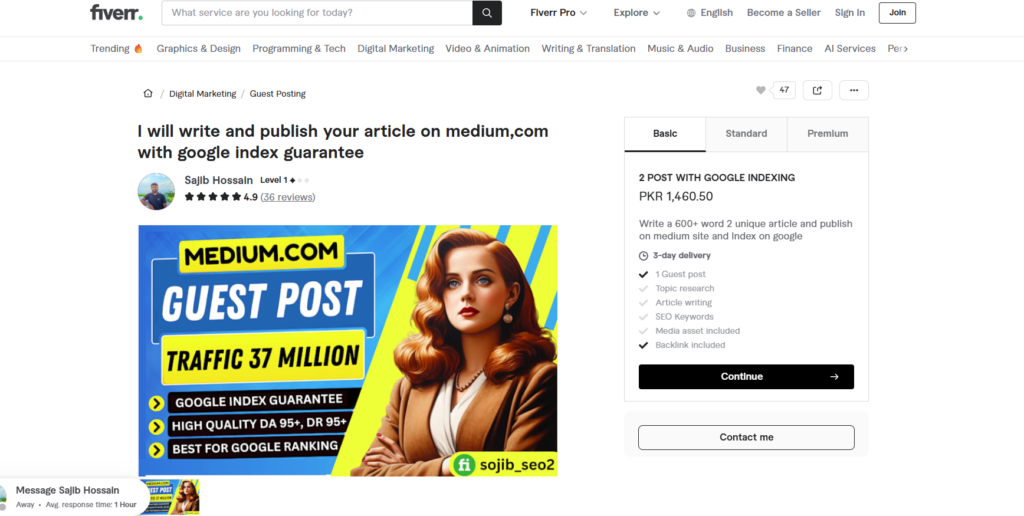
This is the hardest part psychologically.
You want to charge $50 per article. But you have zero reviews and zero reputation.
Nobody will pay $50 for an unknown person when they can pay $15 for someone with 4.9 stars and 200+ reviews.
Beginner pricing strategy:
Month 1-2: Go low. Fiverr: $5-10 per gig. Upwork: $10-15/hour (if hourly). This isn’t your long-term price. This is your “let me prove I’m good” price.
Month 3-4: After your first 5-10 reviews, raise 25-50%. Fiverr: $10-15 per gig. Upwork: $15-20/hour.
Month 5-6: After 20+ positive reviews, raise again. Fiverr: $15-25. Upwork: $20-30/hour.
Month 7+: You’re building a reputation. Raise based on feedback and quality of clients.
This is how you go from making $200/month to $1,000+/month. Not overnight. Gradually. Based on actual proof that you’re good.
Step 5: Write Proposals That Get Responses
On Upwork and PeoplePerHour, you’re bidding on jobs. On Fiverr, clients come to you.
If you’re on Upwork, your proposal quality matters more than your price.
What beginners write: “Hi, I can do this project. I’m a professional writer with experience. Let me know if you want to hire me. Looking forward to working with you.”
What actually works: “Hi [Client Name],
I understand you need a 1,500-word article on remote work productivity tools. I’ve written 50+ articles on remote work topics for [mention relevant publications or client types], and I know this space well.
Here’s what I’ll deliver:
- Well-researched article (I’ll spend time understanding current tools)
- SEO optimization (article will rank for ‘productivity tools remote work’)
- Engaging, clear writing (no fluff, no AI-generated feel)
- 2 rounds of revisions included
- Delivery in 5 days
My rate: $35 for this project.
Why me? I don’t just write. I research thoroughly and make sure every sentence earns its place. Check my reviews—they speak for themselves.
Ready to start when you are.”
The difference: You specifically mentioned the job, showed you understand it, promised specific deliverables, gave a clear price, and explained your value.
Step 6: Deliver Exceptional First Work
Your first client is your most important client. Not because they’ll pay the most. Because they’ll determine your entire freelancing future.
If your first job is mediocre, you get a mediocre review. That mediocre review sits on your profile forever, and every future client sees it.
If your first job is excellent, you get a glowing review. That review becomes the foundation of your reputation.
How to deliver exceptional work as a beginner:
Understand the brief completely. Ask clarifying questions before you start. Don’t assume. “When you say ‘engaging,’ do you mean conversational tone or professional-but-friendly?” These questions show you care.
Do more research than expected. You’re writing an article? Read 10 sources, not 3. Understand the topic better than the client does.
Write/create, then revise ruthlessly. First draft is never your best. Write it. Let it sit for a few hours. Read it again with fresh eyes. Cut anything unnecessary. Rewrite awkward sentences. Make it better.
Deliver 1-2 days early. Deadlines matter. Early delivery shows professionalism.
Include a note with your work. “Here’s your article. I’ve focused on making it engaging while keeping the technical information accurate. I used the tone you described and optimized for your target audience. Let me know if any revisions are needed—I’m happy to adjust.”
This shows you understood their brief and paid attention to details.
Step 7: Handle Feedback and Revisions
Your client will almost certainly ask for revisions.
Beginner reaction: “But I worked so hard! How dare they ask for changes!”
Professional reaction: “Great, feedback means I can make this even better.”
How to handle revisions:
- Listen without defensiveness
- Ask clarifying questions if you don’t understand
- Make the changes quickly
- Deliver the revision with a note: “I’ve made the changes you requested. Let me know if you’d like anything else adjusted.”
If a client asks for something unreasonable (complete rewrite when they approved the outline, scope creep beyond original agreement), you can professionally decline: “I’m happy to make revisions to the original scope. For significant changes beyond that, we’d need to adjust the fee.”
But in the beginning, be flexible. Absorb the revision work. Get a great review. Build momentum.
Step 8: Get Your First Review and Leverage It
After your first job, ask your client for a review (most platforms do this automatically).
A positive review from your first client is worth more than you’d think.
It’s not about the number of reviews. It’s about the proof that you can deliver.
One client with a 5-star review saying “Did exactly what I asked, great communication, fast turnaround” is better than nothing.
Use that review:
On Fiverr: You can now charge slightly higher rates and cite your positive reviews.
On Upwork: You can reference that positive feedback in your proposals.
On PeoplePerHour: That review becomes part of your public profile.
Step 9: Scale Up (Multiple Clients, Higher Rates)
Once you have 2-3 positive reviews and you’ve delivered good work, you can:
Raise your rates – 25-50% increase is reasonable with proof of quality
Be more selective – You don’t have to take every job anymore. Pick clients who seem professional and clearly communicate expectations.
Potentially specialize – “I work with SaaS companies on blog content” is better than “I write articles.” Specialization lets you charge more.
Build long-term relationships – If a client likes your work, they’ll hire you for multiple projects. Long-term relationships pay better than one-off gigs.
Common Mistakes Beginners Make (And How to Avoid Them)
Mistake #1: Spreading Too Thin
You sign up for Fiverr, Upwork, PeoplePerHour, Remote.co, Freelancer.com, and 5 other platforms. You complete each profile halfway. You wonder why nobody hires you.
Fix: Pick ONE platform. Complete your profile fully. Get 3-5 clients. Then expand.
Mistake #2: Pricing Too Low and Staying There
You start at $5/gig to build reviews. Three years later, you’re still at $5/gig because you’re not confident enough to raise prices.
Fix: Raise prices as you get reviews. After 10 reviews, raise 25%. After 20 reviews, raise again. Gradual increases tied to actual proof.
Mistake #3: Not Following Up
You send a proposal on Upwork. Client doesn’t respond in 24 hours. You give up.
Fix: Follow up professional 2-3 days later: “Wanted to check if you had any questions about my proposal. Happy to clarify anything.”
Mistake #4: Over-promising
“I can deliver in 2 days!” (But you know you need 5 days really.)
Fix: Underestimate delivery times slightly. “I can deliver in 4 days” when you think you need 3 gives you a buffer.
Mistake #5: Disappearing After the Job
Job is done. Client pays. You never follow up.
Fix: Send a note after completion: “Thanks for working with me! If you need similar work in the future, feel free to reach out. Enjoyed this project.”
This subtle follow-up often leads to repeat work.
Real Earnings Numbers (What You Can Actually Make)
Let’s be honest about money.
Month 1: $0-50 (You’re still setting up, maybe 1 small job)
Month 2: $50-200 (1-2 small projects, building momentum)
Month 3: $200-500 (3-5 projects, clients start recognizing you)
Month 4: $400-800 (You’ve raised prices once, getting repeat clients)
Month 5: $600-1,200 (Repeat clients + new clients at higher rates)
Month 6: $800-1,500 (You’re selective, clients seek you out)
The timeline varies based on:
- Your skill level
- How serious you are (part-time vs. full commitment)
- The field you choose (writing pays less than programming; both can work)
- Your willingness to start low
I earned about $150 in month one. By month six, I was at $1,200/month. By month twelve, I had regular clients paying $50-100 per project.
Action Plan: Start This Week
Today:
- Pick one platform (Fiverr or Upwork)
- Decide what skill you’re offering
This Week:
- Complete your profile fully
- Create 2-3 sample pieces of work
- Set low but reasonable starting rates
Next Week:
- Send out 10-20 proposals (Upwork) or wait for first client (Fiverr)
- When you get interested responses, communicate professionally
Next Month:
- Complete your first project excellently
- Get your first review
- Leverage that for future clients
The Hard Truth
Starting freelancing with zero experience is possible. People do it every day.
But it requires:
- Willingness to start at low rates
- Ability to handle rejection
- Commitment to doing excellent work
- Patience through the slow month 1-2
Most people quit in month 2 when nothing’s happening. That’s when you should push harder.
The people who succeed aren’t necessarily more talented. They’re just stubborn enough to push through the boring early phase when progress is slow.
If you can do that, you’ll be fine.
Your Next Step
Pick your platform. Create your profile. Start today.
Not tomorrow. Not next week. Today.
The sooner you start, the sooner you’ll have your first client, your first review, and your first real paycheck.
Your future self will thank you for getting started.
About the Author
Mohsin Farooq has 8+ years of experience in freelancing and remote work. He started with zero clients and built a sustainable income entirely through platforms like Upwork and Fiverr. He now focuses on helping beginners understand that freelancing is achievable, no matter where they start.
Have questions about freelancing? Contact us or leave a comment below.